
The Rig
If you’re trying to rig a two-fly indicator nymph setup for trout, here’s the simple version: use a heavier point fly to get the rig down, then run a smaller tag fly above it to cover a second food source in the same drift.
This rig is built for deeper runs, buckets, and seams where trout may be eating midges, baetis, caddis larva, stoneflies, or whatever else is getting pushed along near the bottom.
Use this exact setup:
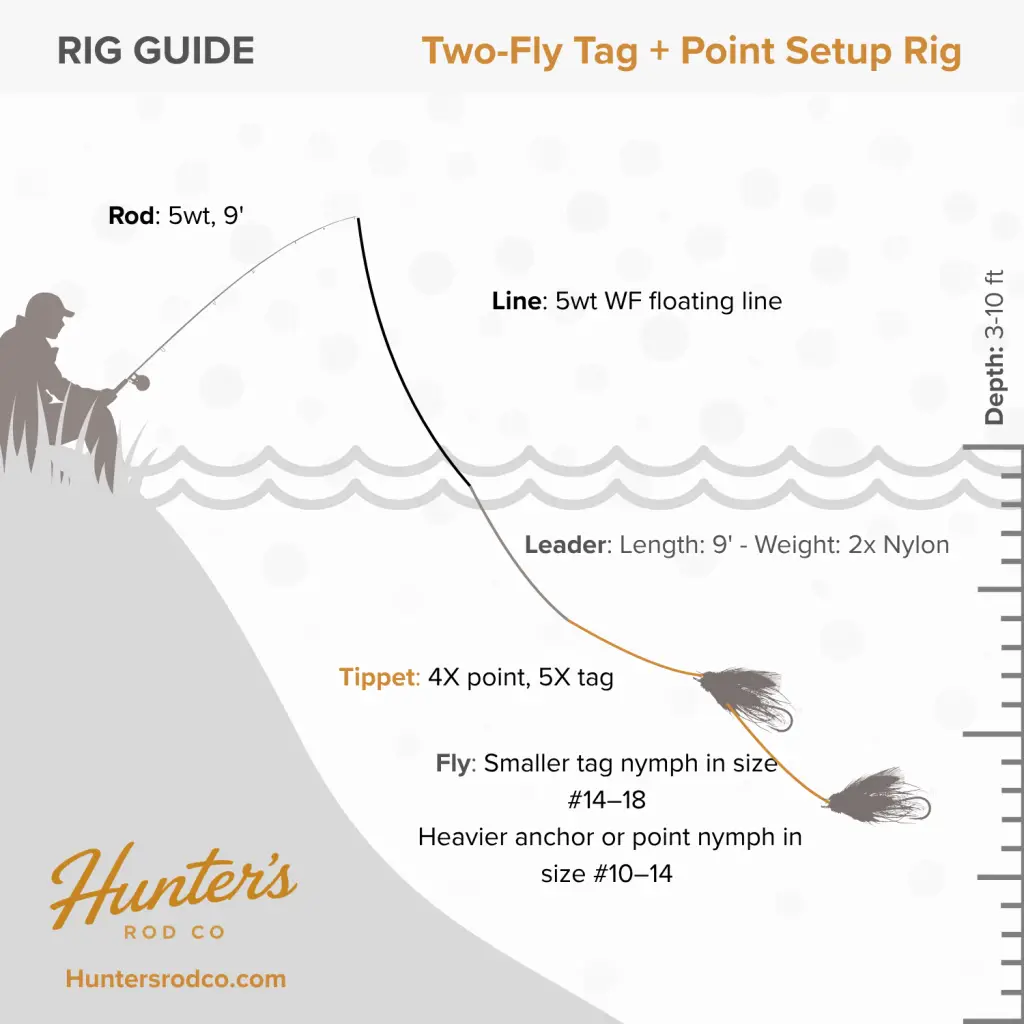
Rod → Line → Leader → Tippet → Fly
- Rod: 5wt, 9′
- Reel: 5/6 large arbor reel
- Line: 5wt weight-forward floating line
- Leader: Length: 9′ – Weight: 2x Nylon
- Tippet: 4X fluorocarbon to the point fly, with a 5X fluorocarbon tag
18″ tag and 24–36″ point section - Fly:Smaller tag nymph in size #14–18
Heavier anchor or point nymph in size #10–14
The point fly should help the whole setup sink, while the tag fly gives trout a smaller, easier meal above it.
Rig Info
Depth
3–10 ft
Temp
40–60°F
Season
Fall through spring
Water Type
Medium-depth to deep moving water
Location
Deeper runs, buckets, seams
Stop Guessing Your Rig
Sign up for the Rig Report newsletter and get one practical fly setup each week, with when to fish it, how to adjust it, and what usually goes wrong.
Thank you!
You have successfully joined our subscriber list.
Short Explanation
A two-fly indicator nymph rig lets you fish two different food profiles at once. The heavier point fly rides lowest and helps the rig reach depth. The smaller tag fly rides slightly above it, where trout often pick off smaller insects drifting just off the bottom.
This is a strong confidence setup because it does not rely on one perfect fly choice. You can run a larger attractor, stonefly, worm, or tungsten nymph on the point, then a smaller mayfly, midge, or caddis pattern on the tag.
How to Fish a Two-Fly Indicator Nymph Rig
Start by setting your indicator roughly 1.5 times the water depth. In 4 feet of water, start with about 6 feet from indicator to point fly. Adjust from there.
Cast upstream or slightly upstream and across. Let the rig land with the indicator, flies, and leader in the same drift lane. Then mend early so the indicator does not drag the flies unnaturally.
Focus on:
- Depth: Your flies need to tick near the bottom, not drag the bottom nonstop.
- Speed: The indicator should drift at the same pace as the bubbles or foam line.
- Mending: Mend before drag starts, not after the indicator is already pulling.
- Angle: A slightly upstream cast gives the flies time to sink.
- Tension: Keep light contact, but do not pull the rig through the lane.
- Hook sets: Set on any pause, dip, twitch, or sideways move.
A good drift should look boring. The indicator moves naturally, the flies stay under control, and you are not constantly fighting the rig.
Here’s a great video explaining how to fish this rig: https://www.youtube.com/watch?v=4h6qkU9aObo
Gear Breakdown
Here’s the setup broken down without overcomplicating it:

Rod
- Weight: 5 wt
- Length: 9′
A 9′ 5wt has enough reach for mending and enough backbone to cast an indicator, split shot, and two flies without feeling overloaded.

Reel
- Type: Large Arbor
- Size: 5/6
A large arbor reel helps pick up slack quickly when a fish eats downstream or runs straight at you.

Line
- Weight: 5wt
- Type: Weight-forward floating line
A WF floating line turns over the indicator rig better than a delicate dry fly line, especially when you are fishing heavier point flies or adding split shot.

Leader
- Length: 9′
- Weight: 2X
- Material: Nylon
The 2X leader gives the rig enough turnover power while still leaving room to build a clean fluorocarbon tippet section below it.

Tippet
- Point Tippet: 4X fluorocarbon
- Tag Tippet: 5X fluorocarbon
- Tag Length: 18″
- Point Length: 24–36″
Use 4X to the heavier point fly for strength and abrasion resistance. Use 5X on the tag so the smaller fly moves naturally and looks less stiff in clear water.

Fly
- Tag Fly: Small nymph, size #14–18
- Point Fly: Heavier anchor nymph, size #10–14
- Good Pairings: Stonefly and baetis, worm and midge, caddis larva and pheasant tail
The point fly gets the rig down. The tag fly gives trout a smaller second option without needing to re-rig constantly.
This is the kind of setup where a properly matched rod makes a big difference in control.

This rig is best when trout are feeding below the surface and holding in deeper, slower, or broken water.
Look for:
- Deeper runs from 3–10 feet
- Buckets below riffles
- Inside seams with steady current
- Tailouts with enough depth
- Cold water periods from fall through spring
- Water temps around 40–60°F
- Slightly off-color water where a two-fly rig helps cover options
This setup is especially useful when you are not sure exactly what trout are eating. Run one larger fly that gets attention and one smaller fly that matches common insects.
When This Rig Won’t Work Well
This is not always the best choice.
Skip it or adjust when:
- The water is very shallow
- Trout are rising steadily to dries
- The bottom is covered in heavy weeds
- The current is too fast to control the drift
- Fish are spooky in flat, clear water
- Local regulations do not allow two flies
In skinny water, this rig can be too much. Too much weight, too much splash, and too many knots near nervous trout.
Adjustments and Common Mistakes
The indicator keeps dragging
Make an upstream mend earlier. Also check that your cast is not landing across too many current seams.
The flies are not getting deep enough
Move the indicator higher, add a small split shot, or use a heavier point fly. Do one change at a time.
You are hanging up every drift
Shorten the distance between indicator and flies, remove weight, or switch to a lighter point fly. Occasional bottom contact is good. Constant snagging is not.
The tag fly keeps tangling
Shorten the tag to 12–16 inches. Also slow down your casting stroke and avoid false casting too much.
Fish are eating but you are missing them
Set faster and downstream at a slight angle. Many indicator eats are subtle, especially in cold water.
The rig lands too hard
Use a tuck cast only when you need depth fast. In calmer water, open your loop and land the rig softer.
The smaller tag fly is not getting eaten
Change the tag first. Try a midge, baetis, soft hackle nymph, or smaller natural pattern.
The point fly is not helping the rig sink
Use a tungsten bead point fly, add split shot above the tippet section, or shorten the point section slightly for better control.
Bottom Line
The two-fly indicator nymph rig is one of the best trout setups for deeper runs and buckets because it covers two food options while keeping your flies in the strike zone. Use a heavier point fly to get down, a smaller tag fly above it, and adjust depth before you start changing everything else.
FAQ
How do you rig a two-fly indicator nymph setup for trout?
Start with a 9′ 2X nylon leader, add fluorocarbon tippet, tie a heavier point fly on 4X, and run a smaller tag fly on 5X about 18 inches above the point fly. Add an indicator above the leader based on water depth.
How far should the indicator be from the flies?
A good starting point is 1.5 times the water depth. In 4 feet of water, start with about 6 feet from indicator to point fly, then adjust until the flies drift near the bottom.
Which fly should go on the tag?
Use the smaller, lighter fly on the tag. Good choices include midges, baetis nymphs, pheasant tails, caddis larva, or small soft hackle nymphs.
Which fly should go on the point?
Use the heavier fly on the point. Tungsten nymphs, stoneflies, worms, larger caddis patterns, and jig nymphs work well because they help pull the rig down.
Is fluorocarbon better for a two-fly nymph rig?
Fluorocarbon is a good choice because it sinks well and handles abrasion better than nylon around rocks and bottom structure. Nylon is still fine for the leader butt because it turns over the rig well.
What size tippet should I use for a two-fly trout nymph rig?
Use 4X to the point fly and 5X to the tag for most trout water. Go heavier in dirty water or around large fish. Go lighter in clear, slow, technical water.
Should I use split shot with this rig?
Use split shot only when the flies are not reaching depth. A heavy point fly is often enough, but deeper or faster water may need a small shot above the tippet section.
Why does my two-fly nymph rig keep tangling?
The tag may be too long, the cast may be too aggressive, or the rig may have too much weight. Shorten the tag, use a slower casting stroke, and avoid extra false casts.
Want a setup like this tailored for your exact trip?
I built a simple tool that gives you a starting rig based on where you’re fishing, when you’re going, and the rods you already own.
Fill out the form below, and you’ll get a setup you can actually use on the water day of sent right to you.