
The Rig
If you’re trying to figure out how to rig a spring creek dry fly setup for picky trout, here’s the simple, no-BS version. This is all about long leaders, soft landings, and just enough slack to fool fish that see everything.
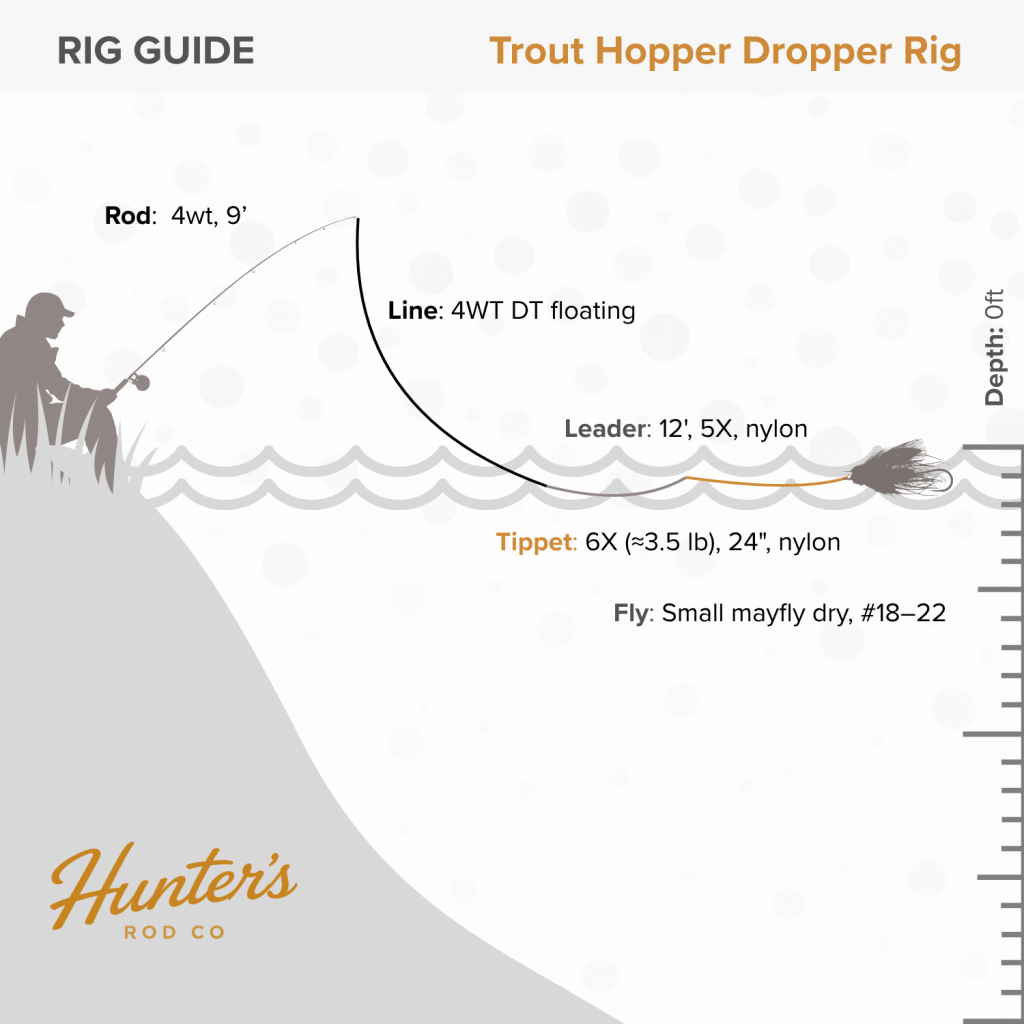
Use this exact setup:
Rod → Line → Leader → Tippet → Fly
- Rod: 4wt, 9′
- Reel: 4/5 size, standard or mid-arbor
- Line: 4wt double taper floating
- Leader: 12′, 5X, nylon
- Tippet: 6X (≈3.5 lb), 24″, nylon
- Fly: Small mayfly dry, #18–22
Last note on rig: if it lands hard or drags fast, you’re done, this setup only works when everything stays subtle.
Rig Info
Depth
Surface
Temp
50–65°F
Season
Spring through fall
Location
Spring creeks, tailwater flats
Water Type
Slow, clear, flat water
Stop Guessing Your Rig
Sign up for the Rig Report newsletter and get one practical fly setup each week, with when to fish it, how to adjust it, and what usually goes wrong.
Thank you!
You have successfully joined our subscriber list.
Short Explanation
This rig is built for ultra-clear, slow water where trout have time to inspect everything. The long leader separates your fly line from the fly, and the light tippet lets the fly drift naturally without pulling it off track.
How to Fish a Long Leader Dry
You’re not casting to water, you’re casting to individual fish.
- Approach low and slow
- Stay crouched
- Use bankside cover when possible
- Cast for slack, not distance
- Reach cast
- Pile cast
- Wiggle cast
- Lead the fish slightly
- Drop the fly 1–3 feet upstream of the target
- Let it drift into the feeding lane
- Control drag early
- Small upstream mends
- Keep rod tip high but relaxed
- Hook set
- Slow and smooth, not aggressive
Gear Breakdown
Here’s the setup broken down without overcomplicating it:

Rod
- Weight: 4 wt
- Length: 9′
Softer rods protect light tippet and improve delicate presentations.

Reel
- Type: Standard Arbor
- Size: 5/6
Mainly line management, not fighting fish hard.

Line
- Weight: 4wt
- Type: DT (Double-Taper) floating
Better roll casting and softer presentations than weight-forward.

Leader
- Length: 12′
- Weight: 5X
- Material: Nylon (Mono)
Long leader keeps line away from wary fish.

Tippet
- Weight: 6X
- Length: 24″
- Material: fluorocarbon (or mono)
Thinner diameter equals better drift and less visibility.

Fly
- Type: small mayfly dry
- Size: #18–22
- Patterns: BWO, PMD, Trico
Match size first, then shape, color matters last.
This is the kind of setup where a properly matched rod makes a big difference in control.
Conditions
This is a very specific tool.
What to look for:
- Flat, glassy water
- Visible rising fish
- Consistent hatch activity
- Clear water with long visibility
Key variables to manage:
- Cast angle
- Quartering upstream is ideal
- Mending
- Minimal, subtle only
- Tension
- Zero drag is the goal
- Drift shape
- Natural, slightly wandering
When this rig struggles:
- Windy conditions
- Fast riffles or pocket water
- Off-color water
- When fish are feeding subsurface
Adjustments
Problem: Fish refuse the fly last second
- Go longer on tippet (30″+)
- Drop to 7X if needed
- Downsize fly
Problem: Drag shows up immediately
- Add slack casts (pile or wiggle)
- Increase leader length to 14–15′
- Check micro-currents between you and the fish
Problem: Can’t turn over the rig
- Slow your casting stroke
- Open your loop slightly
- Consider trimming leader slightly (but not too much)
Problem: Missing hook sets
- Delay your set slightly
- Watch the fish, not just the fly
Bottom Line
This is a precision rig. It rewards patience, clean casts, and attention to detail. When it works, it’s one of the most satisfying ways to catch trout.
FAQ
What is the best leader length for spring creek dry fly fishing?
12–15 feet is ideal to keep the fly line out of wary trout’s view and to improve natural drift.
Why use 6X tippet for spring creeks?
It reduces visibility and drag, helping small flies drift naturally in slow, clear water.
Is double taper better than weight-forward for dry flies?
For technical dry fly fishing, yes. Double taper lines land softer and handle delicate casts better.
Can I use this rig in faster water?
Not really. This setup is designed for slow, flat water where presentation matters more than depth control.
Want a setup like this tailored for your exact trip?
I built a simple tool that gives you a starting rig based on where you’re fishing, when you’re going, and the rods you already own.
Fill out the form below, and you’ll get a setup you can actually use on the water day of sent right to you.