
The Rig
If you’re trying to figure out how to rig a Euro nymphing setup for pocket water, here’s the simple, no-BS version: use a long, light rod, a thin level line or mono rig, a visible sighter, and two weighted nymphs spaced far enough apart to cover fast slots without turning your rig into a tangled mess.
This rig is built for short, controlled drifts in broken water. Think plunge pools, fast seams, boulder gardens, little buckets, and narrow feeding lanes where trout do not have much time to inspect the fly.
Use this exact setup:
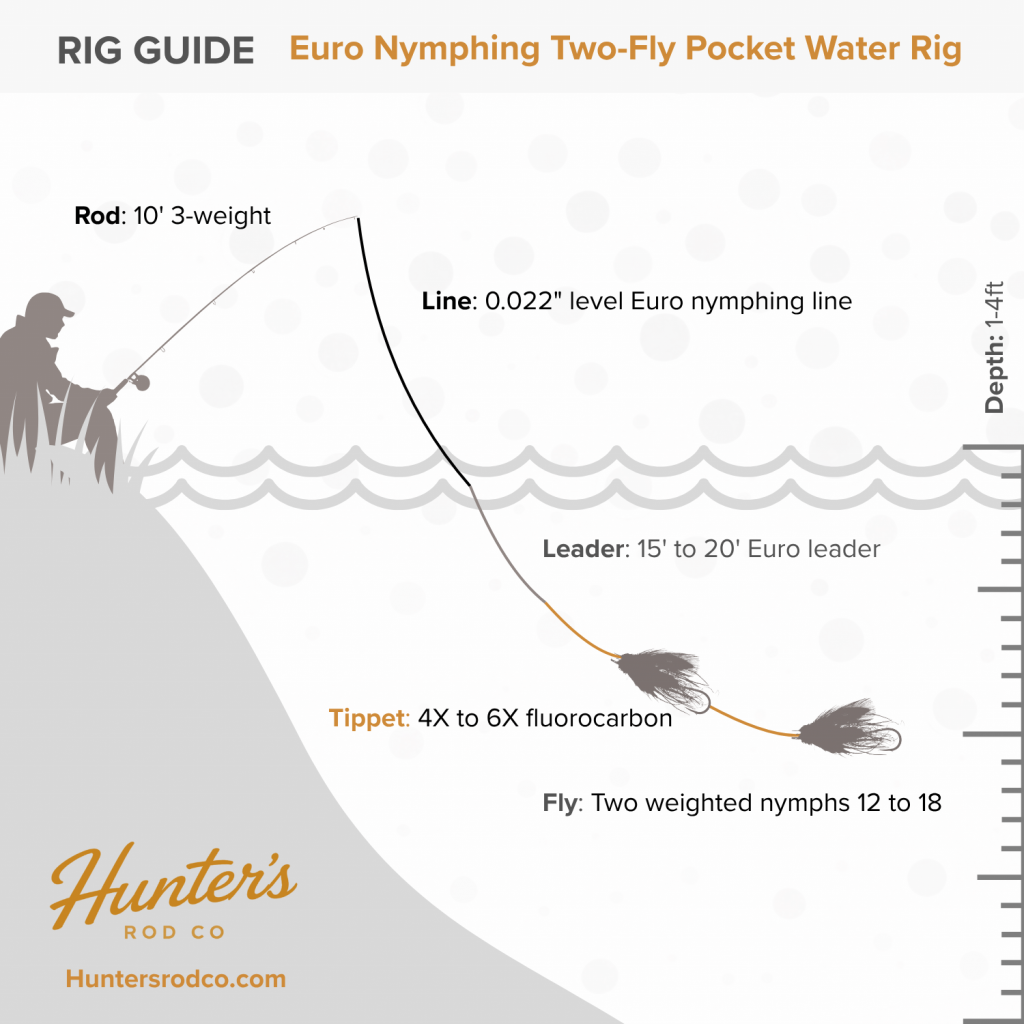
Rod → Line → Leader → Tippet → Fly → Tippet → Fly
- Rod: 10′ to 10’6″ 3-weight Euro nymphing rod
- Reel: 3/4 weight large-arbor reel with a smooth drag
- Line: 0.022″ level Euro nymphing line or mono rig, matched to local rules
- Leader: 15′ to 20′ Euro leader with a built-in or added sighter
- Tippet: 4X to 6X fluorocarbon, usually 4′ to 6′ total below the sighter
- Fly: Two weighted nymphs, usually size 12 to 18
Last note on the rig: keep it light enough to drift naturally, but heavy enough to touch bottom now and then.
Rig Info
Depth
1' to 4'
Temp
roughly 38°F to 62°F
Season
Year-round
Water Type
Pocket water, broken current, seams, slots, and fast chutes
Location
Freestone streams, tailwaters, fast riffles, boulder runs, plunge pools
Stop Guessing Your Rig
Sign up for the Rig Report newsletter and get one practical fly setup each week, with when to fish it, how to adjust it, and what usually goes wrong.
Thank you!
You have successfully joined our subscriber list.
Short Explanation
A two-fly Euro nymphing pocket water rig is made to get down fast and stay in contact. You are not casting a fly line in the traditional sense. You are lobbing a weighted rig into a short lane, leading it through the current, and watching the sighter for any hesitation, lift, tick, or sideways move.
Pocket water gives trout cover, oxygen, and food. It also gives you ugly currents. That is why this rig works so well. The long rod keeps line off the water, the sighter helps you read depth and speed, and the two flies let you test different weights, sizes, colors, or food profiles at once.
How to Fish a Euro Nymphing Two-Fly Rig
Start close. Pocket water rewards short, accurate drifts more than long casts.
Work upstream or slightly upstream-and-across. Drop the flies into the soft edge of the pocket, then lead them downstream just slower than the surface current. The goal is controlled contact, not dragging the flies like an anchor.
Basic approach
- Pick one pocket, slot, or seam before you cast.
- Cast or lob slightly upstream of the target.
- Let the flies drop quickly.
- Raise the rod tip to remove slack.
- Track the sighter through the drift.
- Set on anything that looks different.
Cast angle
- Use a short upstream cast for tight pockets.
- Use an upstream-and-across cast for longer seams.
- Avoid casting too far across heavy current because it pulls the rig off course.
Mending
You usually do not mend this rig like a floating line rig. Instead, adjust with rod position.
- Lift the rod to remove slack.
- Lower the rod if the flies are riding too high.
- Move the rod tip downstream with the flies.
- Keep the sighter above the water when possible.
Tension
The right tension feels barely connected. You should feel or see ticks, but the flies should still drift.
- Too much tension makes the flies swing unnaturally.
- Too little tension creates missed strikes.
- The sighter should lead the flies, not rip them downstream.
Drift shape
In pocket water, most good drifts are short. A clean 3-second drift in the right lane beats a sloppy 12-second drift through five currents.
Gear Breakdown
Here’s the setup broken down without overcomplicating it:

Rod
- Weight: 3 wt
- Length: 10′
A longer 3-weight gives you reach, control, and better contact without feeling too clunky.

Reel
- Type: Standard Arbor
- Size: 3/4
The reel is mostly a line holder here, but a balanced setup makes high-sticking all day much easier.

Line
- Weight: Euro-specific line or thin mono system
- Type: Level Euro nymphing line, competition-style line, or mono rig
A thin line helps maintain direct contact and keeps the rig from getting pulled around by conflicting surface currents.

Leader
- Length: 15′ to 20′
- Weight: 6X
- Material: Nylon (Mono)
A long leader keeps fly line out of the guides and off the water, which is the whole point of the setup

Tippet
- Weight: 4X, 5X, or 6X
- Length: 4′ to 6′ total below the sighter
- Material: fluorocarbon
Fluorocarbon sinks well, handles abrasion, and gives the flies a cleaner drift in fast, broken water.

Fly
- Type: Weighted nymphs
- Size: #12-18
- Patterns:
- Top fly: Lighter nymph, attractor, perdigon, pheasant tail, caddis, or mayfly pattern
- Bottom fly: Heavier anchor fly, jig nymph, stonefly, perdigon, or heavy mayfly nymph
Use the bottom fly to set depth and the top fly to test what fish want.
This is the kind of setup where a properly matched rod makes a big difference in control.
Conditions
This rig shines when trout are holding in small, defined feeding spots. You want water that has current, structure, and a softer holding lane nearby.
Look for
- Soft cushions in front of rocks
- Buckets behind boulders
- Foam lines through broken water
- Seams where fast water meets slower water
- Plunge pools below small drops
- Riffles with 1′ to 4′ of depth
- Fast banks with undercut edges
Best conditions
- Slight stain or broken surface
- Trout feeding below the surface
- Cold or moderate water temps
- High oxygen areas in summer
- Lower light or pressured fish
When this rig does not work as well
- Very flat, glassy water where the leader spooks fish
- Extremely shallow water where weighted flies snag instantly
- Heavy weed beds
- Slow pools where an indicator or dry-dropper gives a better presentation
- Water so high and dirty that fish are pinned tight to the bank
Adjustments: This Is Happening, What Should I Do?
Your flies are snagging every drift
- Use lighter flies.
- Shorten the tippet below the sighter.
- Lead the rig slightly faster.
- Move the cast a little farther from the heaviest bottom structure.
You want occasional bottom contact, not a rock collection.
You are not touching bottom at all
- Add a heavier point fly.
- Use a tungsten bead instead of brass.
- Lengthen the tippet below the sighter.
- Slow down your lead.
- Cast slightly farther upstream to give the flies more time to sink.
No bottom contact usually means the flies are drifting above the feeding lane.
The sighter is sagging too much
- Shorten the drift.
- Get closer to the target.
- Lift more line off the water.
- Use a thinner leader or line.
- Avoid casting across multiple current seams.
Sag kills strike detection and drags the flies out of position.
The flies are swinging at the end of every drift
- Stop the drift earlier.
- Keep moving the rod tip with the flies.
- Reduce tension.
- Cast more upstream instead of across.
A little lift at the end can trigger a fish, but an early swing usually ruins the drift.
You are missing strikes
- Set faster.
- Set on smaller movements.
- Use a slightly shorter tippet section.
- Keep better contact through the middle of the drift.
- Check your hooks after every snag.
In pocket water, most takes are quick. Do not wait to confirm them.
You keep tangling the two flies
- Open your casting loop.
- Lob the rig instead of false casting.
- Increase the distance between flies to 18″ to 24″.
- Use a shorter tag, around 4″ to 6″.
- Avoid sudden power on the forward cast.
Most two-fly tangles come from trying to cast this rig like a dry fly setup.
Bottom Line
For Euro nymphing pocket water, keep the rig simple: long 3-weight rod, thin line, visible sighter, fluorocarbon tippet, and two weighted nymphs. Fish close. Lead the flies through short lanes. Adjust weight before you change everything else.
The best version of this rig is not the fanciest one. It is the one that gets down fast, stays under control, and lets you detect the strike before the trout spits the fly.
FAQ
What is the best Euro nymphing rig for pocket water?
The best Euro nymphing rig for pocket water is a 10′ to 10’6″ 3-weight rod with a thin Euro line or mono rig, a long leader, a visible sighter, 4X to 6X fluorocarbon tippet, and two weighted nymphs. Use the heavier fly on the point and a smaller or lighter fly on a tag above it.
How far apart should two Euro nymphing flies be?
For pocket water, space two Euro nymphing flies about 16″ to 24″ apart. Go closer in tight, shallow pockets and farther apart in deeper runs or longer seams.
Should the heavier fly go on top or bottom?
Most of the time, put the heavier fly on the bottom as the point fly. It helps the rig sink and keeps the lighter tag fly drifting above it. In snaggy water, you can reverse that setup and run the lighter fly on point.
What size tippet should I use for Euro nymphing pocket water?
Use 4X to 6X fluorocarbon. Go with 4X in heavy current, dirty water, or around bigger fish. Use 5X as the standard choice. Use 6X when the water is clear, pressured, or the flies are small.
How deep should a Euro nymphing pocket water rig fish?
Most pocket water Euro nymphing happens in 1′ to 4′ of water. The flies should occasionally tick bottom, but they should not drag or snag on every cast.
Do I need a special Euro nymphing line?
A Euro nymphing line helps if you want a clean, legal, purpose-built setup. A mono rig can also work very well where it is allowed. The key is reducing sag and keeping direct contact with the flies.
What flies should I use for a two-fly pocket water rig?
Start with one heavier jig nymph or perdigon on point and one smaller mayfly, caddis, or attractor nymph on a tag. Common sizes are 12 to 18. In fast water, simple slim flies often sink better and fish better than bulky patterns.
When should I not use a two-fly Euro nymphing rig?
Skip it when the water is very flat, extremely shallow, full of weeds, or slow enough that an indicator rig or dry-dropper gives a better drift. Also avoid two flies where local regulations limit you to one fly.
Want a setup like this tailored for your exact trip?
I built a simple tool that gives you a starting rig based on where you’re fishing, when you’re going, and the rods you already own.
Fill out the form below, and you’ll get a setup you can actually use on the water day of sent right to you.