
The Rig
If you’re trying to figure out how to rig an indicator nymph setup with one fly and split shot, here’s the simple, no-BS version. This is the basic trout nymph rig most anglers should learn first. It works in runs, seams, pockets, tailouts, and slower edges where trout are feeding below the surface.
The goal is simple: use a floating line, a long enough leader, one weighted nymph, and enough split shot to get the fly down without turning the whole rig into a tangled mess.
Use this exact setup:
Rod → Line → Leader → Tippet → Indicator → Splitshot → Fly
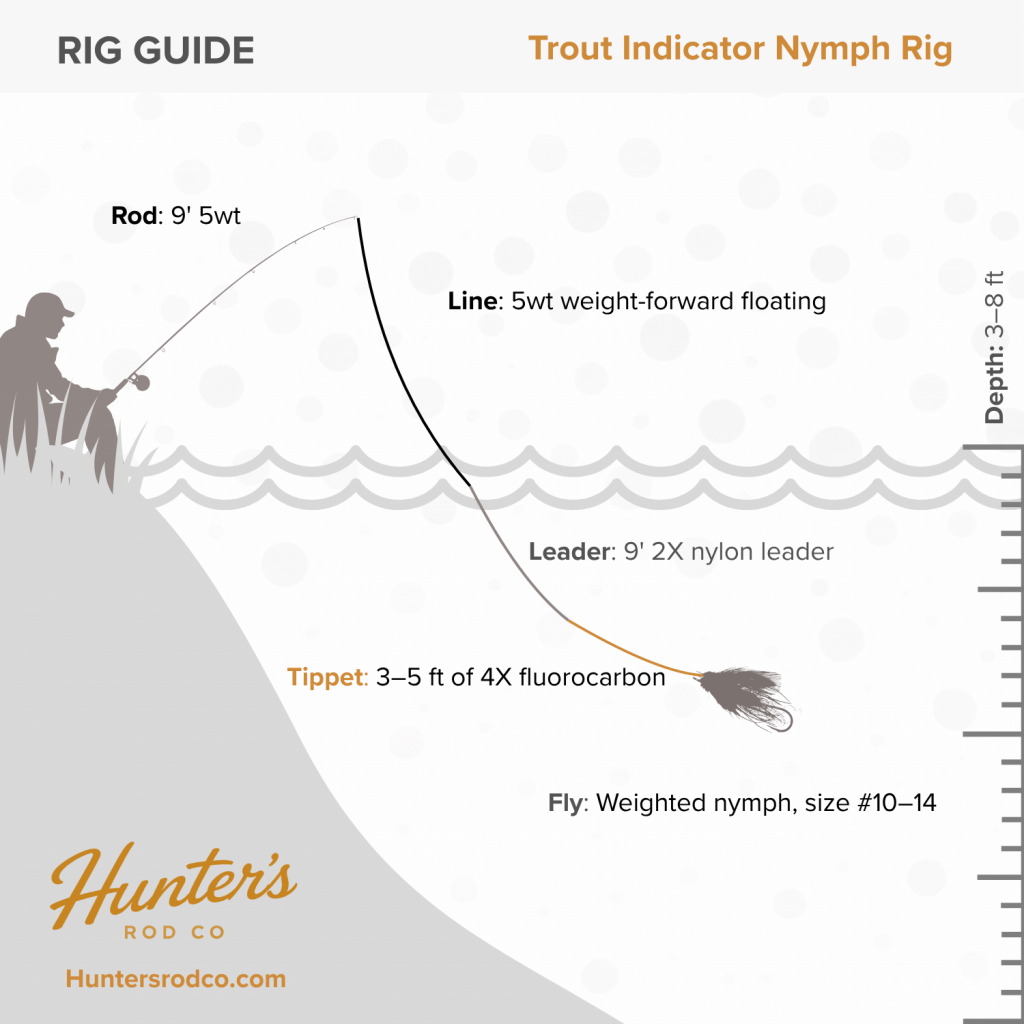
- Rod: 9′ 5wt fly rod
- Reel: 5/6 large arbor reel
- Line: 5wt weight-forward floating fly line
- Leader: 9′ 2X nylon leader
- Tippet: 3–5 ft of 4X fluorocarbon, about 6 lb test
- Fly: Weighted nymph, size #10–14
- Weight: One or two split shot placed above the fly
- Indicator: Thingamabobber, Air-Lock, yarn, or small foam indicator
Last note on this rig: start lighter than you think, then add shot until the fly ticks bottom every now and then. If it’s not ticking the bottom, you aren’t deep enough. This took me a while to learn.
Rig Info
Depth
3–8 ft
Temp
40–60°F
Season
Year-round
Water Type
Runs, seams, slots, soft edges, and moderate-depth riffle drop-offs
Location
Freestone runs and tailwaters
Stop Guessing Your Rig
Sign up for the Rig Report newsletter and get one practical fly setup each week, with when to fish it, how to adjust it, and what usually goes wrong.
Thank you!
You have successfully joined our subscriber list.
Short Explanation
The single heavy anchor rig is a Euro nymphing setup for deep water where the main job is getting down fast and staying connected. The long rod helps control line and keep the leader off the water. The mono leader reduces sag. The fluorocarbon tippet sinks well and holds up around rocks. The tungsten jig nymph does most of the work.
This is not the rig for shallow riffles or spooky fish sipping in skinny water. It is for the kind of run where you know fish are down there, but a lighter fly never gets to them before the drift is over.
How to Fish This Indicator and Nymph Rig
Fish this rig upstream or slightly upstream and across. You want the fly to drift naturally with the current, not drag behind the indicator like a waterlogged kite.
Start with the indicator set about 1.5 times the water depth from the fly. If the water is 4 feet deep, set the indicator roughly 6 feet above the fly. That is not a perfect rule, but it is a good starting point.
Basic Steps
- Cast upstream or upstream-and-across.
- Let the rig land softly if you can.
- Mend right away to remove drag.
- Keep slight control of the floating line without pulling the indicator.
- Watch the indicator the entire drift.
- Set the hook on any pause, dip, twitch, sideways slide, or slow-down.
- At the end of the drift, lift and recast before the rig drags badly.
What A Good Drift Looks Like
A good drift moves at the same speed as the bubbles, foam, or small surface debris around it. If the indicator is racing ahead, your fly is probably dragging. If it barely moves while the current is pushing, your shot may be stuck or too heavy.
Cast Angle
- Use an upstream-and-across cast for most runs and seams.
- Cast more upstream in clear, shallow water.
- Cast more across when you need a longer drift beside a seam.
- Avoid long downstream drifts unless you can control the line well.
Mending
- Mend early, before the line pulls the indicator.
- Keep the mend small if the current is soft.
- Use bigger upstream mends in fast water.
- Do not mend so hard that you move the indicator and lift the fly out of the zone.
Tension
You want light contact with the floating line, not tight contact with the fly. Too much tension drags the nymph. Too little tension gives you slack and late hook sets.
Here’s a great video explaining how to fish this rig: https://www.youtube.com/watch?v=CkciC7G1ns4
Gear Breakdown
Here’s the setup broken down without overcomplicating it:

Rod
- Weight: 5 wt
- Length: 9′
A 9′ 5wt is the standard for this rig because it casts indicators, split shot, and weighted nymphs without feeling oversized for normal trout.

Reel
- Type: Large Arbor
- Size: 5/6
A large arbor reel helps pick up slack quickly, which matters when a trout eats and runs straight back toward you.

Line
- Weight: 5wt
- Type: Weight-forward floating line
A WF floating line turns over the indicator rig better than a delicate presentation line, especially when you add split shot.

Leader
- Length: 9 ft
- Weight: 2x
- Material: Nylon (Mono)
The 2X nylon leader gives the rig a stronger butt section and better turnover, which helps keep casting clean with a bobber and shot.

Tippet
- Weight: 4X
- Length: 3-5 ft
- Material: fluorocarbon
Fluorocarbon sinks better than nylon and has solid abrasion resistance around rocks, which makes it a good choice for the business end of a nymph rig.

Fly
- Type: Weighted nymph
- Size: #10-14
- Patterns: Pat’s Rubber Legs, Hare’s Ear, Pheasant Tail, Prince Nymph, Perdigon, stonefly nymph
A weighted nymph keeps the rig simple. You still use split shot to fine-tune depth, but the fly itself helps get into the zone.
This is the kind of setup where a properly matched rod makes a big difference in control.
Best Conditions For This Rig
This rig works best when trout are feeding near the bottom and you need a controlled dead drift. It is a strong choice when fish are not rising, the water has some depth, or the current is broken enough to hide the indicator.
What To Look For
- Runs that are 3–8 feet deep
- Seams between fast and slow current
- Soft inside edges below riffles
- Drop-offs below shallow riffles
- Tailwaters with steady current
- Freestone runs with broken surface texture
- Water temps from 40–60°F
Where To Put The Fly
Focus on lanes where food naturally collects. The best drift is usually not in the fastest water. It is often just beside it.
Look for:
- The soft edge beside a fast chute
- A deeper green slot through a run
- The cushion in front of a rock
- The slow side of a bubble line
- The inside seam below a riffle
When This Rig Does Not Work Well
This is not always the best rig. It gets clumsy in very shallow water, heavy pocket water, or spooky flat pools.
Skip it or adjust when:
- The water is less than 2 feet deep
- Trout are sipping dry flies
- Fish are extremely spooky in flat water
- The current is too broken for a clean indicator drift
- You need to fish tight pockets with very short drifts
- The rig keeps hanging bottom every cast
Adjustments And Common Problems
The Indicator Keeps Dragging
- Mend earlier.
- Move closer to the drift lane.
- Shorten your cast.
- Keep less floating line on the water.
- Use a smaller indicator if the water is calm.
The Fly Is Not Getting Deep Enough
- Add one small split shot.
- Move the indicator farther from the fly.
- Cast farther upstream to give the rig more sink time.
- Use a heavier nymph.
- Fish a slower seam instead of the fastest current.
The Rig Keeps Hanging Bottom
- Remove one split shot.
- Move the indicator slightly closer to the fly.
- Use a lighter nymph.
- Cast more across and less straight upstream.
- Check whether you are drifting through water that is shallower than you think.
You Are Missing Strikes
- Set faster.
- Set downstream or slightly sideways.
- Keep less slack between your rod tip and indicator.
- Use a smaller indicator if fish are eating softly.
- Shorten the tippet if the rig feels disconnected.
The Rig Keeps Tangling
- Open your casting loop.
- Slow down your stroke.
- Avoid false casting.
- Use a roll cast or water haul.
- Keep the split shot 8–14 inches above the fly.
- Make sure the leader is not too light for the indicator and shot.
The Indicator Sinks
- Use a larger indicator.
- Use less split shot.
- Dry or replace a yarn indicator.
- Check if weeds or debris are dragging on the fly.
Bottom Line
A single-fly indicator nymph rig with split shot is one of the most useful trout setups you can carry. Keep it simple: 9′ 5wt, floating line, 9′ 2X leader, 3–5 feet of 4X fluoro, one weighted nymph, and just enough shot to touch bottom now and then.
Fish it in runs, seams, and soft edges. Mend early. Watch the indicator like it owes you money. Set on anything weird.
FAQ
How do you rig an indicator nymph setup with one fly and split shot?
Start with a 9′ 5wt rod, a 5wt weight-forward floating line, a 9′ 2X nylon leader, and 3–5 feet of 4X fluorocarbon tippet. Tie on one weighted nymph, then place one or two split shot about 8–14 inches above the fly. Add the indicator about 1.5 times the water depth above the fly.
How far should the indicator be from the fly?
A good starting point is 1.5 times the water depth. In 4 feet of water, set the indicator about 6 feet above the fly. Adjust from there based on whether the rig is ticking bottom or drifting too high.
Where should split shot go on a nymph rig?
Put the split shot 8–14 inches above the fly. Closer shot gets the fly down faster but can make the drift look less natural. Farther shot gives the fly more freedom but may not sink as quickly.
What size fly should I use for an indicator nymph rig?
For this setup, use weighted nymphs in size #10–14. Larger flies work well in deeper or stained water. Smaller flies are better for clear water, tailwaters, and pressured trout.
Is fluorocarbon or nylon better for nymphing tippet?
Fluorocarbon is usually better for the tippet section because it sinks well and handles abrasion. Nylon is still useful for the leader because it turns over the indicator and split shot more smoothly.
What is the best rod for a single-fly indicator nymph rig?
A 9′ 5wt fly rod is the best all-around choice. It has enough power to cast a floating line, indicator, split shot, and weighted nymph, but it still feels right for average trout.
Can you fish this rig year-round?
Yes. This rig can work year-round when trout are feeding below the surface. It is especially useful in water temperatures from 40–60°F, but depth, current speed, and trout behavior matter more than the calendar.
Why does my indicator nymph rig keep tangling?
Most tangles come from casting too hard, using tight loops, false casting too much, or using a leader that is too light for the indicator and shot. Slow the cast down, open the loop, and use roll casts when possible.
Want a setup like this tailored for your exact trip?
I built a simple tool that gives you a starting rig based on where you’re fishing, when you’re going, and the rods you already own.
Fill out the form below, and you’ll get a setup you can actually use on the water day of sent right to you.