

The Rig
If you’re trying to figure out how to rig a floating line streamer setup for trout rivers, here’s the simple version. This rig lets you swing smaller streamers through tailouts and soft seams without going all-in on a heavy sink tip setup. The floating line keeps things easy to cast and mend, while the polyleader helps the fly track just under the surface with a controlled swing.
Use this exact setup:
Rod → Line → Leader → Tippet → Fly
- Rod: 6wt, 9’6″
- Reel: 6/7 large arbor
- Line: 6wt WF floating line
- Leader: 5′ total with polyleader, 0X nylon + poly leader
- Tippet: 12 lb fluorocarbon, 18–24″
- Fly: Unweighted streamer, size #6–10
This setup is built for covering water efficiently while keeping the fly moving naturally across current seams.
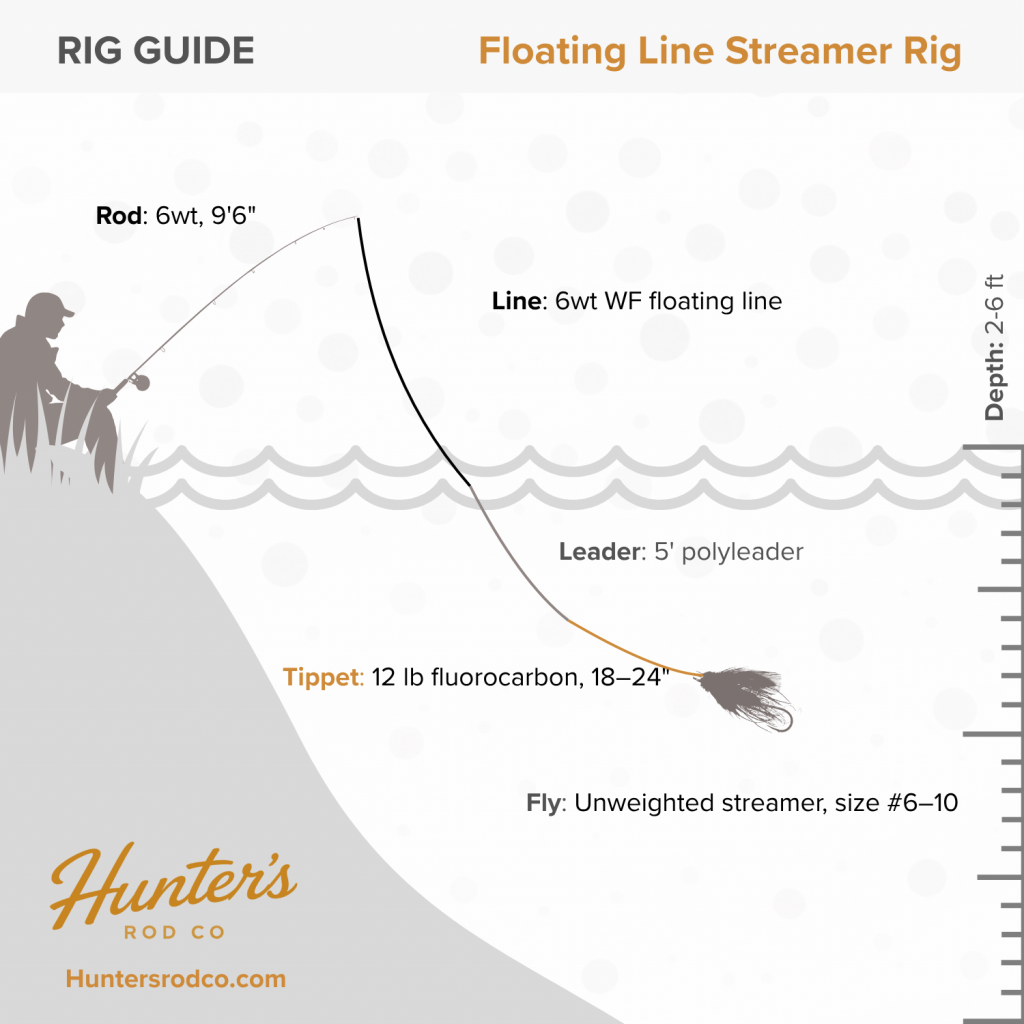
Rig Info
Depth
2-6 ft
Temp
45–65°F
Season
Spring through Fall
Water Type
Rivers and medium-sized trout streams
Location
Tailouts, soft seams, walking-speed runs
Stop Guessing Your Rig
Sign up for the Rig Report newsletter and get one practical fly setup each week, with when to fish it, how to adjust it, and what usually goes wrong.
Thank you!
You have successfully joined our subscriber list.
Why This Streamer Rig Works
A floating line streamer rig is one of the easiest ways to fish streamers effectively without dealing with heavy sink tips or oversized flies. The floating line gives you cleaner mends and better control during the swing, while the polyleader adds just enough sink rate to keep the streamer in the strike zone.
It shines in softer current where trout can slide out and intercept a swinging fly without burning a ton of energy.
How To Fish The Floating Streamer Swing Rig
The goal with this setup is controlled movement, not ripping the fly back to you.
Focus On These Things
- Cast slightly downstream across current
- Mend upstream early to slow the swing
- Let the fly come tight naturally
- Hold tension at the end of the swing
- Take a few slow strips before recasting
- Cover water methodically instead of hammering one spot
Best Water For This Rig
- Tailouts below riffles
- Soft inside seams
- Walking-speed runs
- Shallow buckets near structure
- Banks with softer current edges
Retrieve Tips
- Slow strips work better than fast jerks most days
- Pause occasionally during the swing
- Change swing angle before changing flies
- Fish downstream angles first before casting straight across
Here’s a great video explaining how to fish this rig: https://www.youtube.com/watch?v=HoXxzVumcvY
Gear Breakdown
Here’s the setup broken down without overcomplicating it:

Rod
- Weight: 6 wt
- Length: 9′ 6″
A 6wt gives you enough control to turn over polyleaders and streamers without feeling overly heavy.

Reel
- Type: Large Arbor
- Size: 6/7
You do not need a super heavy drag system here, but smooth startup matters.

Line
- Weight: 6wt
- Type: Weight-forward floating line
A floating line keeps the setup versatile and easier to manage all day.

Leader
- Length: 5′ total including polyleader
- Weight: 0X
- Material: Nylon + polyleader
- Short leader improves turnover
- Polyleader adds controlled sink without heavy splash
- Easier depth adjustment than changing fly lines
- Intermediate or slow sink poly works best most days
This setup keeps the streamer tracking naturally without overcomplicating things.

Tippet
- Weight: 12 lb
- Length: 18–24″
- Material: Fluorocarbon
- Strong enough for aggressive eats
- Fluorocarbon helps the fly sink slightly
- Short section keeps fly control tight
- Abrasion resistance matters around rocks and wood
Heavier tippet also improves streamer movement and turnover.

Fly
- Type: Unweighted streamer
- Size: #6–10
- Woolly Buggers
- Soft hackle streamers
- Small sculpin patterns
- Marabou baitfish flies
Unweighted flies pair better with floating lines because they swing more naturally and stay responsive during the drift.
This is the kind of setup where a properly matched rod makes a big difference in control.

Best Conditions & What To Look For
This rig works best when trout are willing to move sideways in softer current lanes.
Ideal Conditions
- Moderate flows
- Slightly stained water
- Overcast days
- Water temps between 45–65°F
- Swing-friendly current seams
Key Presentation Details
- Cast angle: Slightly downstream
- Mending: Early upstream mend
- Tension: Light steady tension during swing
- Swing shape: Broad controlled arc instead of fast sweep
When This Rig Struggles
- Deep winter water
- Heavy runoff conditions
- Extremely fast current
- Water deeper than about 6 feet
- Situations requiring fast sink rates
If fish are glued to the bottom, a sink tip setup usually outperforms this rig.
Adjustments
“My Fly Is Riding Too High”
- Use a faster-sinking polyleader
- Lengthen the swing before stripping
- Reduce line speed with a bigger mend
- Switch to fluorocarbon if using nylon tippet
“I Keep Hanging Bottom”
- Shorten the swing depth by mending less
- Use an intermediate instead of sink poly
- Speed up the swing angle slightly
- Move to softer seams
“The Fly Looks Dead”
- Add pauses during the swing
- Use softer materials like marabou
- Change swing angle before changing flies
- Slow down your retrieve
“I’m Getting Short Strikes”
- Drop fly size slightly
- Add a trailing soft hackle
- Slow the swing speed
- Keep steady tension instead of stripping too aggressively
Bottom Line
The floating line streamer swing rig is one of the easiest and most versatile ways to fish trout streamers in rivers. It covers water efficiently, casts cleanly, and gives you excellent control without needing a dedicated sink tip setup. For shallow to medium-depth trout water, it is hard to beat.
FAQ
What polyleader should I use for trout streamers?
An intermediate or slow sink polyleader is the best starting point for most trout rivers. It keeps the fly down without making casting difficult.
Can you swing streamers with a floating line?
Yes. A floating line paired with a polyleader is one of the most effective ways to swing smaller trout streamers in moderate-depth water.
What size streamer works best on a floating line rig?
Smaller unweighted streamers in sizes #6–10 work best because they stay responsive and swing naturally without overpowering the floating setup.
Is fluorocarbon better for streamer rigs?
Usually yes. Fluorocarbon sinks slightly faster, resists abrasion better, and helps maintain cleaner depth control during the swing.
When should I switch to a sink tip instead?
Switch to a sink tip when water gets deeper, colder, or faster and trout stop moving up in the water column to chase swinging flies.
Want a setup like this tailored for your exact trip?
I built a simple tool that gives you a starting rig based on where you’re fishing, when you’re going, and the rods you already own.
Fill out the form below, and you’ll get a setup you can actually use on the water day of sent right to you.