
The Rig
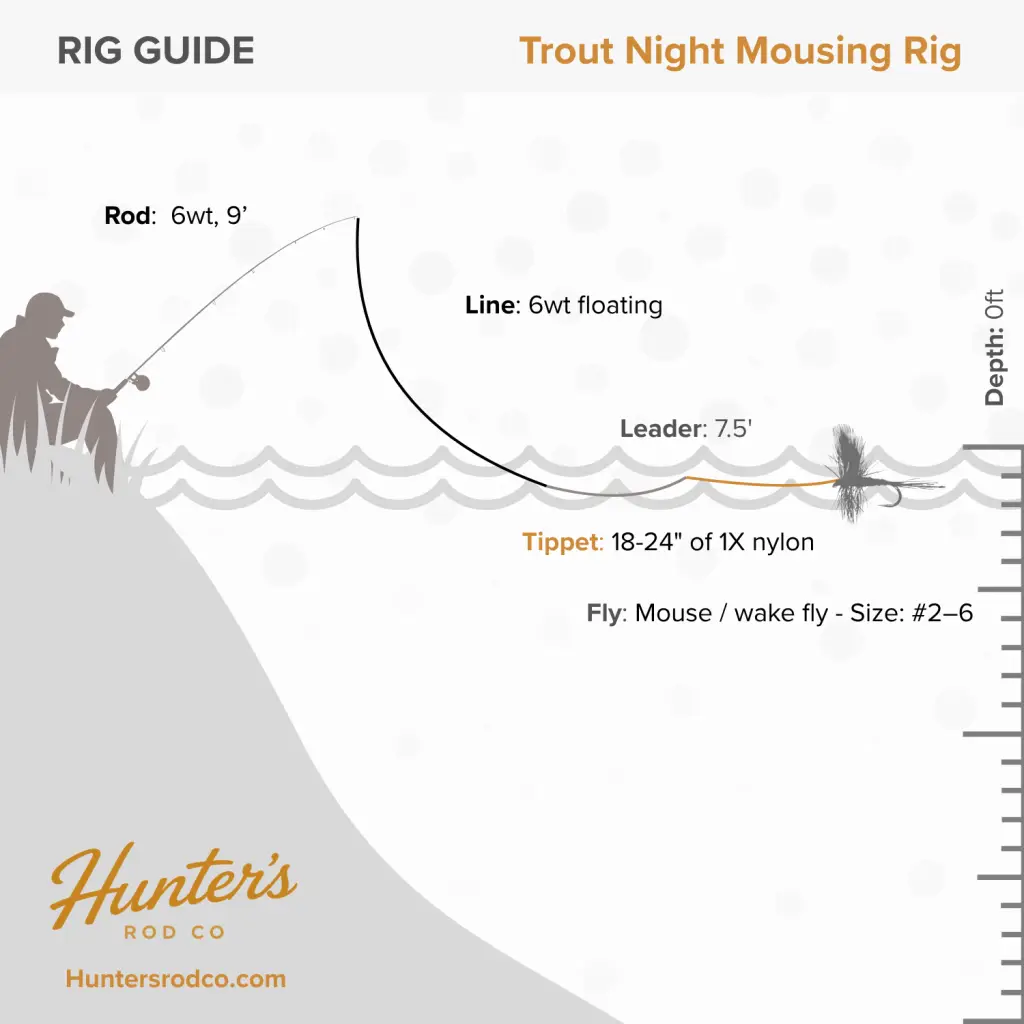
If you’re trying to figure out how to rig a mouse fly for trout at night, here’s the simple version: use a 6wt, a floating line, a short stout leader, and a big mouse pattern that pushes water along the bank.
This is not a delicate rig. It is built for casting in the dark, turning over a bulky fly, and keeping enough control to pull hard when a brown trout eats close to wood, grass, or an undercut bank.
Use this exact setup:
Rod → Line → Leader → Tippet → Fly
- Rod: 6wt – 9′
- Reel: 6/7 – Large arbor
- Line: Weight: 6wt – WF floating line
- Leader: Length: 7.5′ – Weight: 1X
- Tippet: Weight: 10–12 lb 18–24″
- Fly: Mouse/wake fly – #2–6
Last note on this rig: keep it short, strong, and simple because night fishing punishes messy setups fast.
Rig Info
Depth
0-3 ft
Temp
55–70°F
Season
Summer nights
Water Type
Slow banks, soft edges, tailouts, wood cover, grassy margins
Location
Undercut banks, logjams
Stop Guessing Your Rig
Sign up for the Rig Report newsletter and get one practical fly setup each week, with when to fish it, how to adjust it, and what usually goes wrong.
Thank you!
You have successfully joined our subscriber list.
Short Explanation
A mouse fly rig for trout at night is a floating-line setup designed to wake a bulky surface fly across shallow bank water. The goal is not a perfect dead drift. You want the fly to land near cover, stay on top, and make a steady surface push that trout can track in low light.
The 6wt gives you enough backbone to cast a big fly and steer fish away from cover. The short 1X leader turns the mouse over better than a long dry fly leader. Nylon is the better choice here because it floats, stretches a little, and helps the fly wake naturally.
How To Fish This Rig
Mousing is best when you fish slowly and commit to the bank. Most eats happen close to structure, often after the fly has moved several feet.
Start with short, accurate casts. You do not need hero distance at night. You need control.
- Cast slightly upstream or straight across to the bank.
- Land the mouse tight to grass, roots, wood, or an undercut.
- Let the rings settle for a second.
- Begin a slow wake with steady tension.
- Use short strips, rod-tip twitches, or a slow swing.
- Keep the fly moving just enough to push water.
- Wait on the eat before setting.
The biggest mistake is ripping the fly away too fast. When a trout eats a mouse, the take can sound huge, but the fish may miss or push water around the fly first. Keep moving the fly until you feel weight.
Cast Angle
A broadside or slightly downstream angle usually works best. It keeps tension on the fly and helps it wake across the surface.
- Straight across: Good for clean bank swings.
- Slightly downstream: Good when you want immediate tension.
- Slightly upstream: Good when you need the fly to drift into the lane before waking.
Avoid casting too far upstream unless you can manage slack in the dark.
Mending
You are not mending for a perfect dry fly drift. You are mending to control speed.
- Mend upstream if the fly is skating too fast.
- Mend downstream if the fly is dragging dead and losing tension.
- Keep mends small because big mends can move the mouse out of the zone.
Tension
Tension is everything. You want just enough contact to know where the fly is, but not so much that it looks like a water-skier.
A good mouse wake should feel connected, slow, and deliberate.
Swing Shape
Think of the fly moving in a slow arc off the bank. The best path usually starts inches from cover, then wakes across the soft edge where a trout can ambush it.
Do not rush the hang-down. Big fish often follow before eating.
Here’s a great video explaining how to fish this rig: https://www.youtube.com/watch?v=G7EnZqJsM_U&vl=en
Gear Breakdown
Here’s the setup broken down without overcomplicating it:

Rod
- Weight: 6 wt
- Length: 9′
A 6wt has enough power to throw a bulky mouse and enough backbone to control a strong trout near wood or undercut banks.

Reel
- Type: Large Arbor
- Size: 6/7
The reel does not need to be fancy, but a large arbor helps pick up line quickly when a fish eats and runs at you in the dark.

Line
- Weight: 6wt
- Type: Weight-forward floating line
A WF floating line loads the rod easily and helps turn over a wind-resistant mouse pattern without needing a long cast.

Leader
- Length: 7.5′
- Weight: 1X
- Material: Nylon
A short 1X nylon leader turns over big foam, deer hair, and waking flies better than a long fine leader.

Tippet
- Weight: 10-12 lb
- Length: 18–24″
- Material: Nylon
Heavy nylon tippet floats well, absorbs violent eats, and gives you enough strength to pull fish away from grass, roots, and timber.

Fly
- Type: Mouse / wake fly
- Size: #2-6
Pick a mouse that floats high, pushes water, and is easy for trout to find by sound and silhouette.
This is the kind of setup where a properly matched rod makes a big difference in control.
Conditions: Where And When This Works
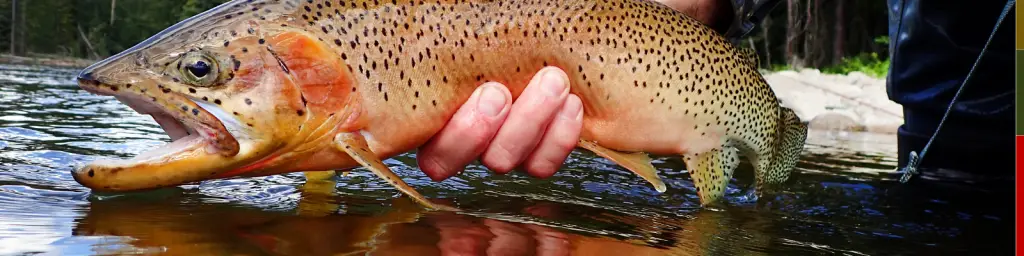
This rig is built for warm summer nights when trout are willing to hunt shallow. It is especially good for brown trout, but rainbows and cutthroat will eat mice too when conditions line up.
Look for water that gives trout cover and a short ambush lane.
- Undercut banks
- Grass edges
- Logjams
- Root balls
- Slow inside bends
- Tailouts below riffles
- Dark bank seams
- Shallow shelves near deep water
The best nights usually have some warmth, stable flows, and low light. You do not need total darkness, but the rig gets better when fish feel safe moving shallow.
Best Conditions
- Water temp: 55–70°F
- Season: Summer nights
- Depth: 0–3 ft
- Flow: Low to moderate
- Visibility: Low light, moonlight, or full dark
- Cover: Banks, wood, grass, cutbanks
When This Rig Struggles
This is not the best setup when trout are glued to the bottom or feeding on tiny insects in clear daylight.
It can struggle in:
- Cold water below about 50°F
- Heavy runoff
- Fast broken pocket water
- Bright, clear, pressured flats
- Extremely low water with spooky fish
- Areas with too much floating debris
- Tight brush where a 9′ rod is hard to manage
Adjustments And Common Mistakes
The fly keeps landing in a pile
Shorten the leader or use a more aggressive casting stroke.
- Drop from 7.5′ to 6′
- Use 10–12 lb tippet
- Open your casting loop slightly
- Slow down and let the rod load
The mouse is skating too fast
Control the swing speed with angle and mending.
- Cast more across than downstream
- Add a small upstream mend
- Lower the rod tip
- Slow your strips down
Trout are blowing up but not getting hooked
Do not trout-set on the sound. Wait until you feel the fish.
- Keep the fly moving after the splash
- Set low and firm when the line comes tight
- Try a smaller mouse
- Switch from #2 to #4 or #6
You are missing the bank
Move closer and shorten the cast. Accuracy matters more than distance at night.
- Fish 20–40 foot casts
- Aim for edges you can actually hit
- Use the rod tip to guide the wake
- Avoid blind bombing long casts into cover
The fly is sinking
Use a better-floating fly or treat it before fishing.
- Dry the fly often
- Add floatant to deer hair or foam as needed
- Use nylon instead of fluorocarbon
- Check that the fly is not waterlogged
Fish are following but not eating
Change speed before changing flies.
- Pause after the fly lands
- Try a slower wake
- Add tiny twitches
- Let the fly hang at the end of the swing
- Downsize to a #6 mouse
Bottom Line
The best mouse fly rig for trout at night is a 9′ 6wt with a WF floating line, a 7.5′ 1X nylon leader, 18–24″ of 10–12 lb nylon tippet, and a #2–6 mouse or wake fly.
Keep the rig stout. Fish it close to the bank. Move the fly slowly. Most of all, do not set on the splash. Wait until the fish is actually there.
FAQ
How do you rig a mouse fly for trout at night?
Rig a 6wt rod with a WF floating line, a 7.5′ 1X nylon leader, 18–24″ of 10–12 lb nylon tippet, and a #2–6 mouse fly. Keep the leader short so the fly turns over cleanly in the dark.
What size rod is best for mouse flies?
A 6wt is the best all-around rod for trout mousing. It has enough power to cast bulky mouse patterns but is still manageable for regular trout water.
Do you need floating line for mouse flies?
Yes, a floating line is the standard choice for mouse flies. The fly is meant to stay on the surface and wake across shallow water, so a sink tip is usually the wrong tool.
What leader should I use for a mouse fly?
Use a short, stout nylon leader around 7.5′ in 1X. Add 18–24″ of 10–12 lb nylon tippet if you want a fresh bite section.
Is fluorocarbon good for mouse flies?
Nylon is usually better. It floats better than fluorocarbon, has a little stretch, and helps the mouse ride correctly on the surface.
What size mouse fly is best for trout?
A #2–6 mouse fly is the normal range. Use #2 or #4 for bigger water and aggressive fish. Use #6 when fish are missing the fly or the water is low and clear.
Where should I cast a mouse fly at night?
Cast tight to undercut banks, grassy edges, root balls, logjams, and slow seams near deeper water. The closer you can safely fish to cover, the better.
When should I set the hook on a mouse fly?
Set only when you feel the fish. Night eats can be loud and dramatic, but trout often miss the first swipe. Keep the fly moving until the line comes tight, then set low and firm.
What water temperature is best for mousing trout?
This rig is best around 55–70°F. It can still work outside that range, but warm summer nights with stable flows are usually the most reliable.
Can you fish a mouse fly during the day?
You can, especially in dirty water, heavy shade, or remote rivers with aggressive trout. But this rig is strongest at night when large trout feel safer hunting shallow banks.
Want a setup like this tailored for your exact trip?
I built a simple tool that gives you a starting rig based on where you’re fishing, when you’re going, and the rods you already own.
Fill out the form below, and you’ll get a setup you can actually use on the water day of sent right to you.