
The Rig
If you’re trying to figure out how to rig a hopper dropper for late summer trout along grassy banks, here’s the simple, no-BS version.
Use this exact setup:
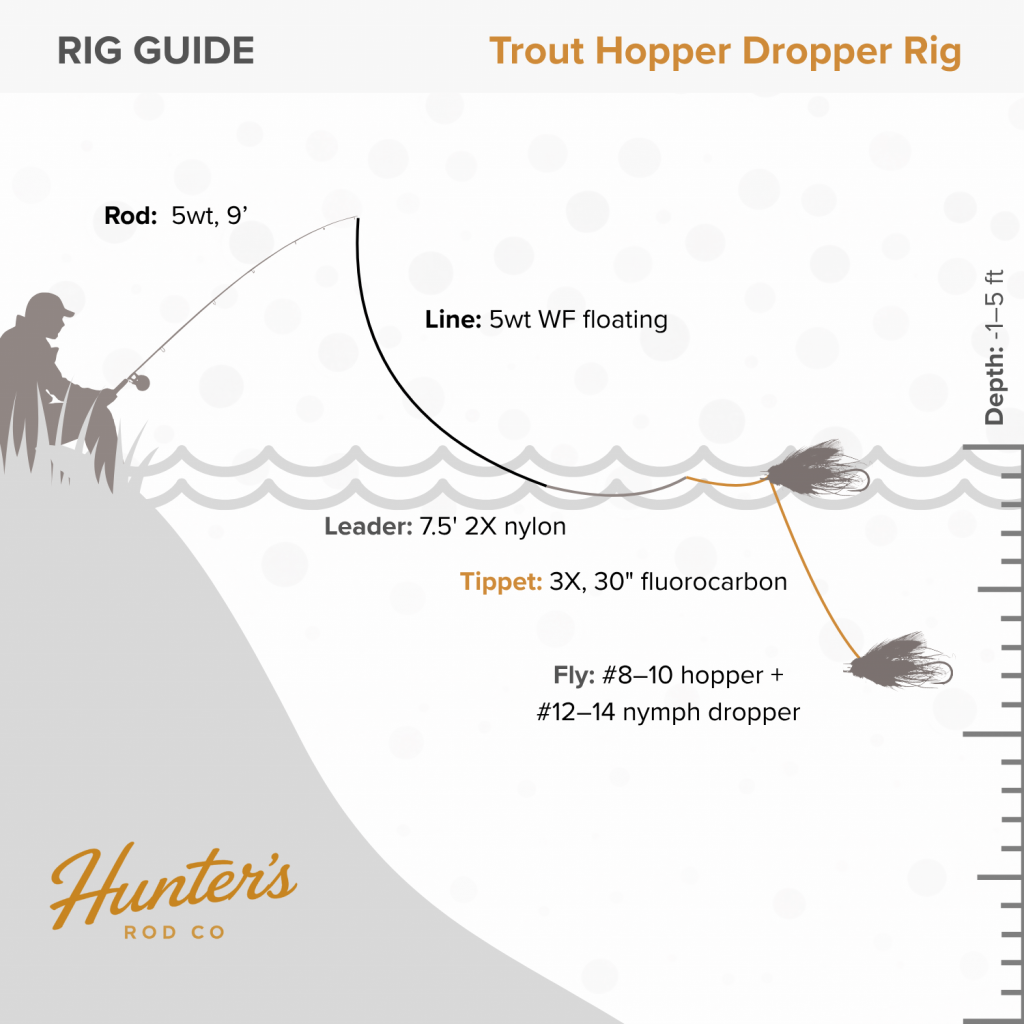
Rod → Line → Leader → Tippet → Fly → Tippet → Fly
- Rod: 5wt, 9′
- Reel: 5/6 large arbor
- Line: 5wt WF floating
- Leader: 7.5′ 2X nylon
- Tippet: 3X (≈8 lb), 30″ fluorocarbon
- Fly: #8–10 hopper + #12–14 nymph dropper
Last note on rig: This setup is built to turn over big foam flies and still get your nymph down in heavier seams.
Rig Info
Depth
Surface + 2–6 ft
Temp
55–68°F
Season
Summer–Early Fall
Location
Meadow rivers, cutbanks
Water Type
Fast to moderate flow with undercut structure
Stop Guessing Your Rig
Sign up for the Rig Report newsletter and get one practical fly setup each week, with when to fish it, how to adjust it, and what usually goes wrong.
Thank you!
You have successfully joined our subscriber list.
Short Explanation
This rig covers two lanes at once: the hopper pulls fish up from the bank while the dropper cleans up anything holding just below. It’s efficient, easy to track, and ideal when fish are keyed in on terrestrials but not fully committing.
How to Fish a Hopper Dropper Rig
Focus on tight bank shots and controlled drifts. Most eats happen fast.
- Cast within inches of the bank (seriously close)
- Let it dead drift first, then add slight movement at the end
- Watch the hopper like an indicator—any twitch or dip = set
- Mend early to reduce drag, especially in mixed currents
- Keep casts short to stay accurate and reduce tangles
Drift tips:
- High-stick when close
- Lead slightly downstream to keep tension
- Reposition often instead of forcing long drifts
Gear Breakdown
Here’s the setup broken down without overcomplicating it:

Rod
- Weight: 5 wt
- Length: 9′
A little backbone helps with quick hooksets near structure

Reel
- Type: Large Arbor
- Size: 5/6
Smooth drag for quick runs along banks

Line
- Weight: 5wt
- Type: WF (Weight Forward) floating
Aggressive front taper preferred

Leader
- Length: 7.5′
- Weight: 2X
- Material: Nylon (Mono)
Shorter, thicker leader improves turnover

Tippet
- Weight: 3X
- Length: 30″
- Material: fluorocarbon (or mono)
Strong enough for bigger fish near cover.

Fly
- Type: Foam hopper + beadhead nymph
- Size: #8–10 hopper / #12–14 nymph
A buoyant dry supports the rig while a natural nymph handles most of the actual hookups.
This is the kind of setup where a properly matched rod makes a big difference in control.
Conditions
Look for banks that scream “food falls in here.”
- Undercut banks with grasshoppers present
- Slow seams next to faster current
- Shade lines and overhanging vegetation
- Warm afternoons with light wind
Key variables:
- Cast angle: Slightly upstream or perpendicular to bank
- Mending: Minimal but early
- Tension: Just enough to stay connected
- Drift shape: Natural, tight to structure
When it struggles:
- Flat, glassy water with spooky fish
- Cold mornings when terrestrials aren’t active
- Heavy pocket water (dry-dropper works better there)
Adjustments
“My hopper lands sloppy”
- Shorten leader or go heavier (even 1X)
“Dropper isn’t getting down”
- Add a tungsten bead nymph or extend tippet to 36″
“I keep missing eats”
- Set on anything unnatural—don’t wait
“Too many tangles”
- Open your loop and slow down your cast
“Fish won’t rise to hopper”
- Downsize hopper or switch to a smaller dry with same dropper
Bottom Line
This is one of the most reliable late-summer rigs out there—simple, visible, and effective along banks where trout are hunting.
FAQ
What size hopper works best for trout?
#8–10 is the sweet spot, big enough to see, not so big it spooks fish.
How far should the dropper be below the hopper?
Start at 30″ and adjust based on depth (longer for deeper runs).
Can I use 4X tippet instead of 3X?
You can, but 3X helps with turnover and strength near structure.
Do I need split shot with a hopper dropper?
Usually no, use a heavier nymph first before adding weight.
Where should I cast this rig?
Right against the bank, under grass, or along cutbanks, closer than feels comfortable.
Want a setup like this tailored for your exact trip?
I built a simple tool that gives you a starting rig based on where you’re fishing, when you’re going, and the rods you already own.
Fill out the form below, and you’ll get a setup you can actually use on the water day of sent right to you.