
The Rig
If you’re trying to figure out the best high-stick nymph rig for small streams, here’s the simple version: keep it short, light, and easy to control. In tight canopy creeks and pocket water, this setup gives you better drift control, less drag, and faster hooksets at close range.
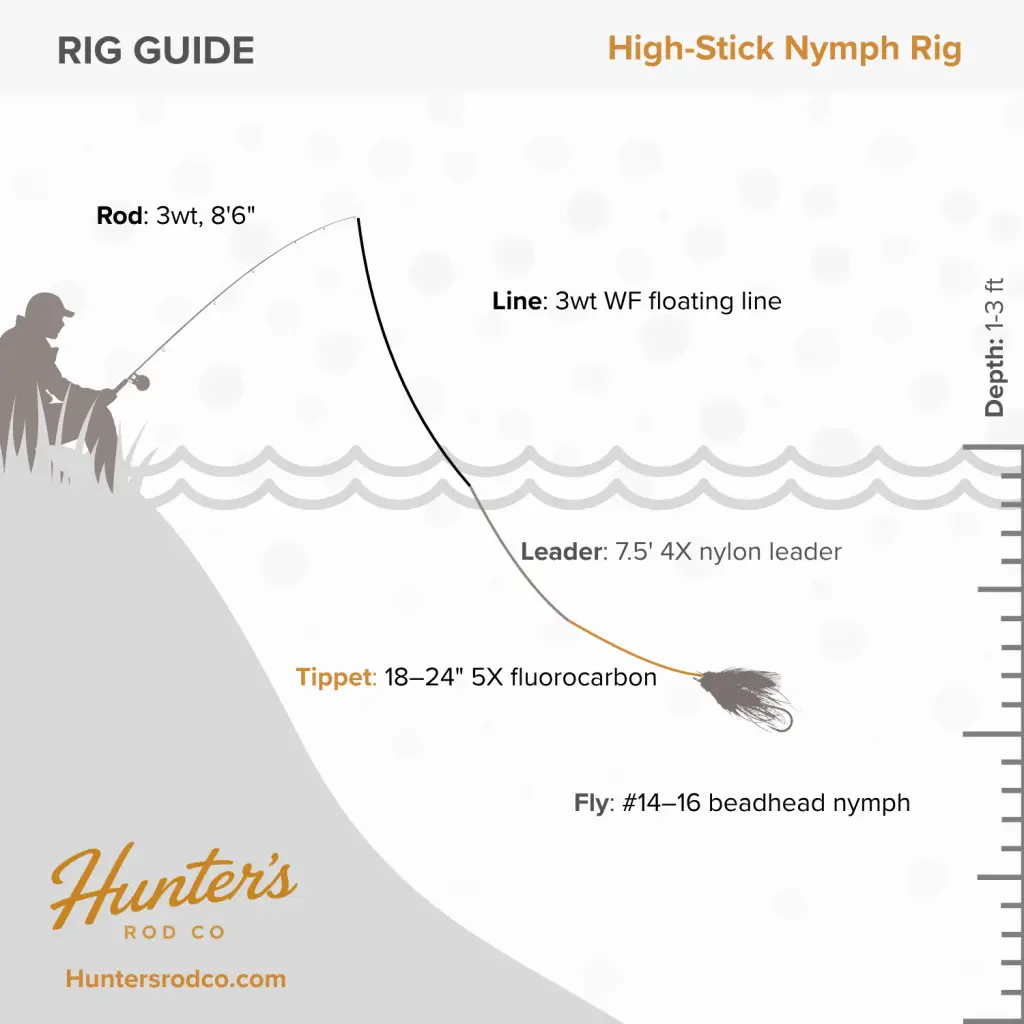
Use this exact setup:
Rod → Line → Leader → Tippet → Fly
- Rod: 3wt, 8’6″
- Reel: Standard 3/4 size reel
- Line: 3wt WF floating line
- Leader: 7.5′ 4X nylon leader
- Tippet: 18–24″ 5X fluorocarbon
- Fly: #14–16 beadhead nymph
A compact rig like this keeps most of your fly line off the water, which is the whole point of high-stick nymphing in small streams.
Rig Info
Depth
1-3 ft
Temp
45–65°F
Season
Spring through Fall
Water Type
Pocket water, riffles, plunge pools
Location
Small freestones and tributaries
Stop Guessing Your Rig
Sign up for the Rig Report newsletter and get one practical fly setup each week, with when to fish it, how to adjust it, and what usually goes wrong.
Thank you!
You have successfully joined our subscriber list.
Why This Rig Works
Small streams don’t give you much room to cast. Most fish are close, currents change fast, and overhanging branches punish long leaders and extra false casts.
This rig keeps things simple.
The shorter rod helps under tree cover while still giving enough reach to hold line off conflicting currents. A floating line loads quickly at short distance, and the fluorocarbon tippet helps the fly sink faster while staying harder for trout to see.
The whole setup is built around control more than distance.
How to Fish This Rig
High-stick nymphing is basically controlled short-line drifting. You’re leading the fly through seams and pockets while keeping as little line on the water as possible.
What To Do
- Stay close to the target water
- Use short upstream casts
- Keep your rod tip high
- Lead the fly slightly downstream as it drifts
- Watch for any hesitation or twitch
- Set the hook fast and low
Cast Angle
- Fish mostly upstream or slightly upstream-across
- Short drifts work best
- Don’t try to bomb casts across the creek
Mending
- Minimal mending needed
- The goal is keeping line off the water entirely
Tension
- Maintain light contact with the fly
- Too much tension drags the nymph unnaturally
Drift Shape
- Natural dead drift first
- Let the fly finish with a slight swing at the end
That little swing often triggers fish sitting behind rocks or in tailouts.
Here’s a great video explaining how to fish this rig: https://www.youtube.com/watch?v=VQYqExJ–cc
Gear Breakdown
Here’s the setup broken down without overcomplicating it:

Rod
- Weight: 3 wt
- Length: 8′ 6″
A shorter 3wt is ideal for tight brush and small water accuracy while still protecting light tippet.

Reel
- Type: Basic Reel
- Size: 3/4
You don’t need anything fancy here. Balance matters more than drag strength on small streams.

Line
- Weight: 3wt
- Type: Weight-forward floating line
Weight-forward floating lines load quickly at short range and help with quick roll casts under trees.

Leader
- Length: 7.5 ft
- Weight: 4x
- Material: Nylon (Mono)
A shorter nylon leader turns over better in confined spaces and keeps the rig easier to control.

Tippet
- Weight: 5X
- Length: 18-24″
- Material: fluorocarbon
Fluorocarbon sinks faster and handles abrasion better around rocks.

Fly
- Type: Beadeheaded nymph
- Size: #14-16
- Patterns:
- Pheasant Tail
- Hare’s Ear
- Prince Nymph
- Frenchie
- Zebra Midge in deeper slots
Smaller beadheads match most small-stream mayflies and caddis while still getting down quickly in shallow pockets.
This is the kind of setup where a properly matched rod makes a big difference in control.

Best Conditions
This setup shines when fish are holding close to structure in smaller moving water.
- Pocket water
- Short riffles
- Boulder seams
- Small plunge pools
- Moderate current speed
- Clear to slightly stained water
Best Times
- Spring runoff drop
- Summer mornings
- Fall before water temps crash
Water Depth
- Ideal in 1–3 feet of water
- Deeper than that usually calls for more weight or an indicator setup
When This Rig Struggles
- Wide rivers needing long casts
- Deep slow pools
- Heavy wind
- Extremely spooky fish in ultra-clear flat water. You could also try this rig for flat water dries.
If the stream opens up or gets deeper, a longer rod and euro-style setup usually fishes more efficiently.
Adjustments
“I Keep Getting Hung Up”
- Shorten your drift
- Reduce split shot if using any
- Move to a smaller bead
“I’m Not Getting Deep Enough”
- Add a tungsten fly
- Extend tippet slightly
- Approach from closer upstream
“The Drift Looks Draggy”
- Raise the rod tip higher
- Keep less fly line on the water
- Shorten casting distance
“Fish Keep Breaking Off”
- Check for nicks constantly
- Move from 5X to 4.5X or 4X in heavy current
- Loosen your drag slightly
“I Can’t Cast Under Trees”
- Use roll casts
- Water load the rod
- Keep backcasts low or nonexistent
Bottom Line
For tight creeks and small freestone streams, this high-stick nymph rig keeps things efficient and controlled. Short rod. Short leader. Short drifts. That’s usually the formula for catching fish in confined water.
Most anglers overcomplicate small-stream nymphing. This setup keeps you fishing instead of adjusting gear all day.
FAQ
What is the best rod length for high-stick nymphing on small streams?
An 8’6″ 3wt is one of the best all-around lengths for small-stream high-stick nymphing because it balances reach and maneuverability under tree cover.
Do I need an indicator for high-stick nymphing?
Not usually on small streams. Most strikes are detected through direct contact or slight hesitation in the leader.
Why use fluorocarbon tippet for nymphing?
Fluorocarbon sinks faster, resists abrasion better, and is less visible underwater compared to nylon.
What flies work best for high-stick nymph rigs?
Simple beadhead nymphs like Pheasant Tails, Hare’s Ears, Frenchies, and small Princes work consistently in small-stream conditions.
Can I use this rig year-round?
Yes, but it fishes best from spring through fall when trout are active in shallow moving water. Winter often requires deeper presentations and slower drifts.
Want a setup like this tailored for your exact trip?
I built a simple tool that gives you a starting rig based on where you’re fishing, when you’re going, and the rods you already own.
Fill out the form below, and you’ll get a setup you can actually use on the water day of sent right to you.